

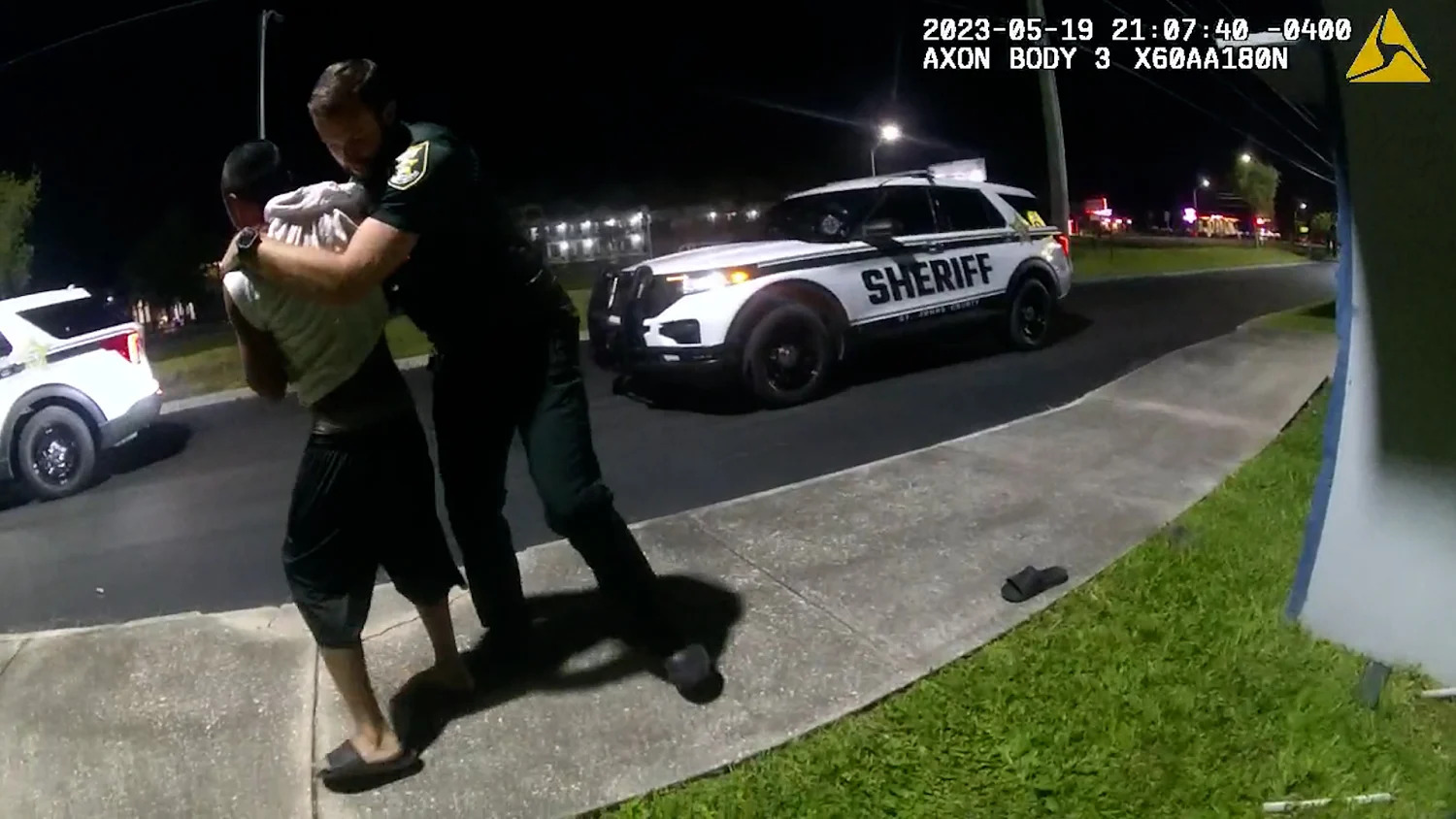
Newly released body-worn camera footage shows that Decarlos Brown Jr. — now accused of the fatal stabbing of Iryna Zarutska — had a concerning interaction with police months before the deadly incident. In January 2025, officers responded to a welfare call after Brown dialed 911 himself. He told them a “man-made material” had been placed inside his body and was controlling his actions
During that encounter, Brown described believing that the implanted material controlled all his bodily functions — what he ate, how he moved, and even when he talked. Officers urged him to seek medical help and cautioned against further misuse of 911 after he placed a second call while they were present. He was detained and charged with misuse of the emergency number.
Mental-Health Concerns Raised Before the Train Attack
Friends and family of Brown say he had been diagnosed with a serious psychiatric condition, and his January 2025 call came amid his ongoing struggles for help. Despite his pleas for help and apparent distress, police did not commit him involuntarily because he did not express intent to harm himself or others.
This earlier interaction raises troubling questions about missed opportunities for intervention — and whether the system could have prevented the tragedy had mental-health support been provided.
From Welfare Call to Fatal Stabbing
On August 22, 2025, seven months after the bodycam encounter, Brown allegedly stabbed 23-year-old Zarutska to death aboard a light rail train in Charlotte. Surveillance video of the attack shows that Zarutska had no prior contact with Brown: she sat down in front of him, and about four minutes later he produced a folding knife and stabbed her in the neck. The attack was described as unprovoked.
Investigators also revealed that there was no security presence in the train car where the stabbing occurred — though there were officers on board the previous car.
Why the Earlier Police Contact Matters
The bodycam video offers a crucial glimpse into the suspect’s mental state months before the killing. Brown’s claims of being controlled by some “foreign substance” and his repeated calls for help might have warranted further psychological evaluation or intervention. That early interaction — if addressed differently — could have flagged him as a potential danger.
Moreover, the case has reignited debates about public transit safety, mental health support systems, and how authorities should respond when individuals exhibit signs of serious mental distress.
Conclusion: Warning Signs Missed
The January 2025 bodycam footage now stands as a stark warning that the suspect’s prior behavior may have foreshadowed the tragedy. What might have been considered a call for help was not treated as such — and the result was catastrophic. The death of Iryna Zarutska underscores the consequences when mental-health crises and public safety intersect but are not properly addressed.
Read More About